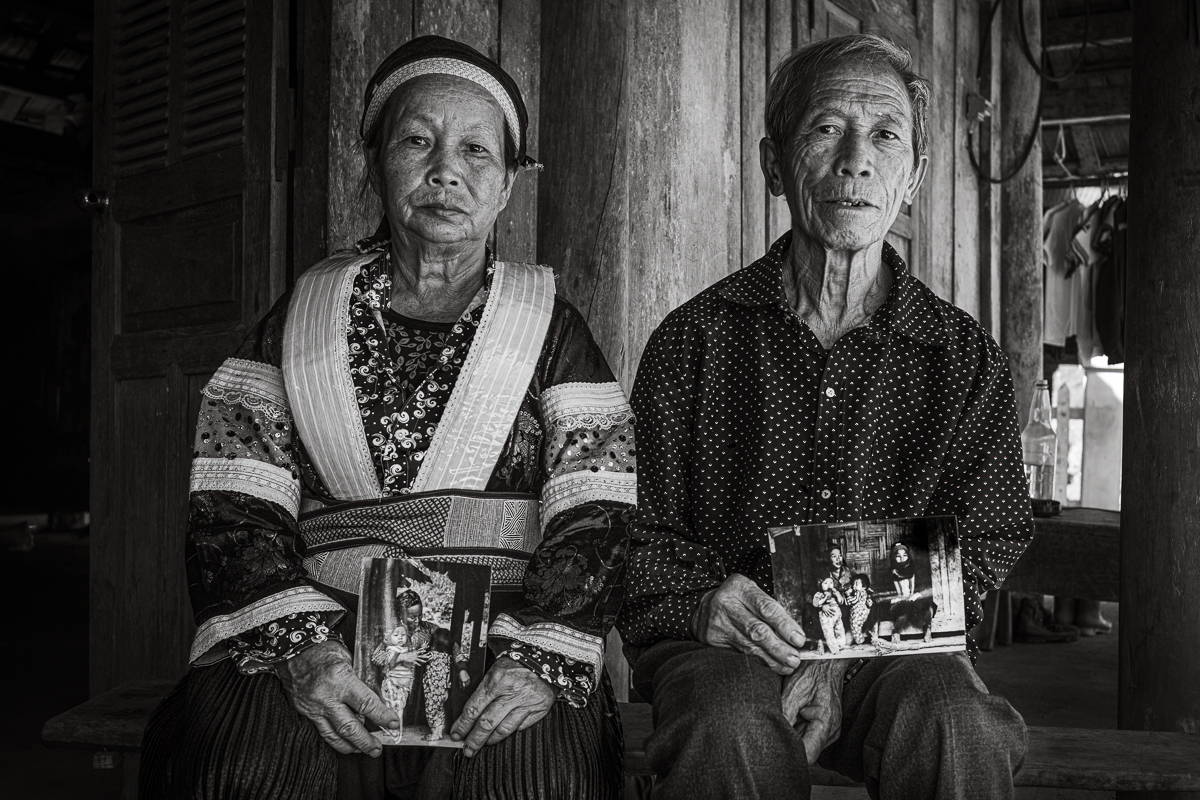
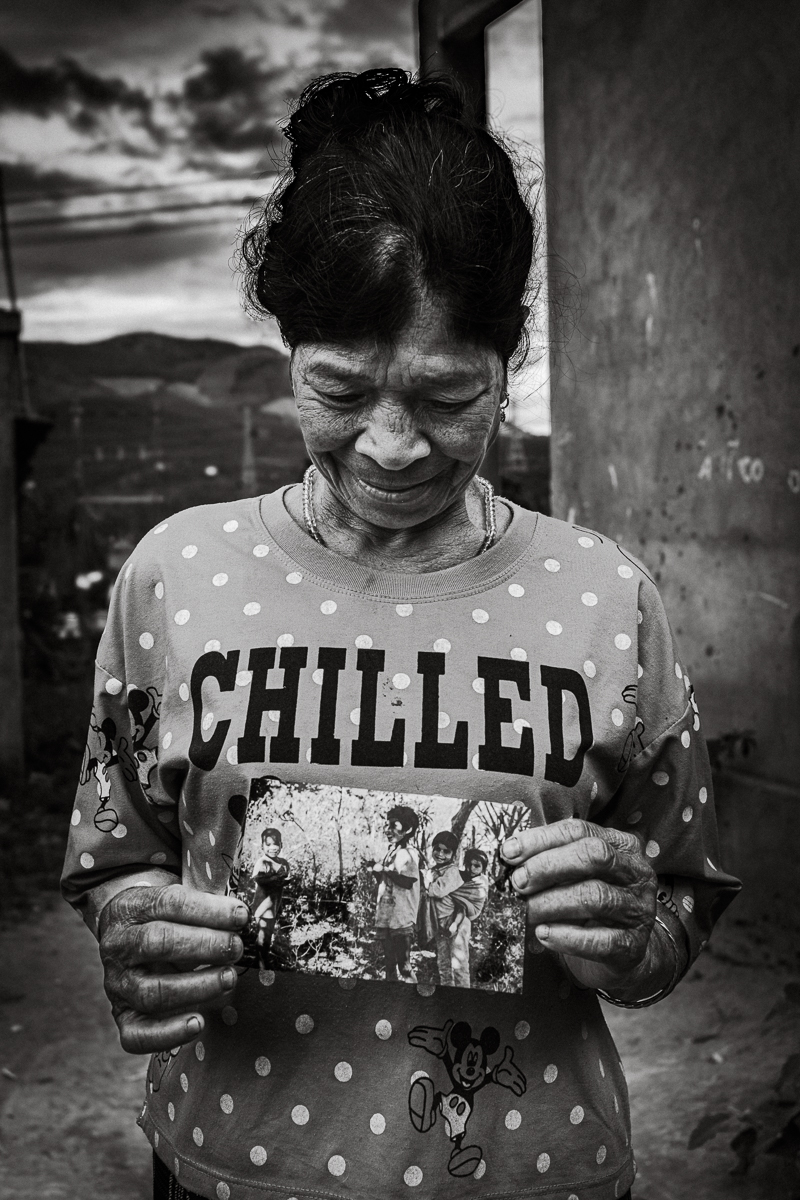
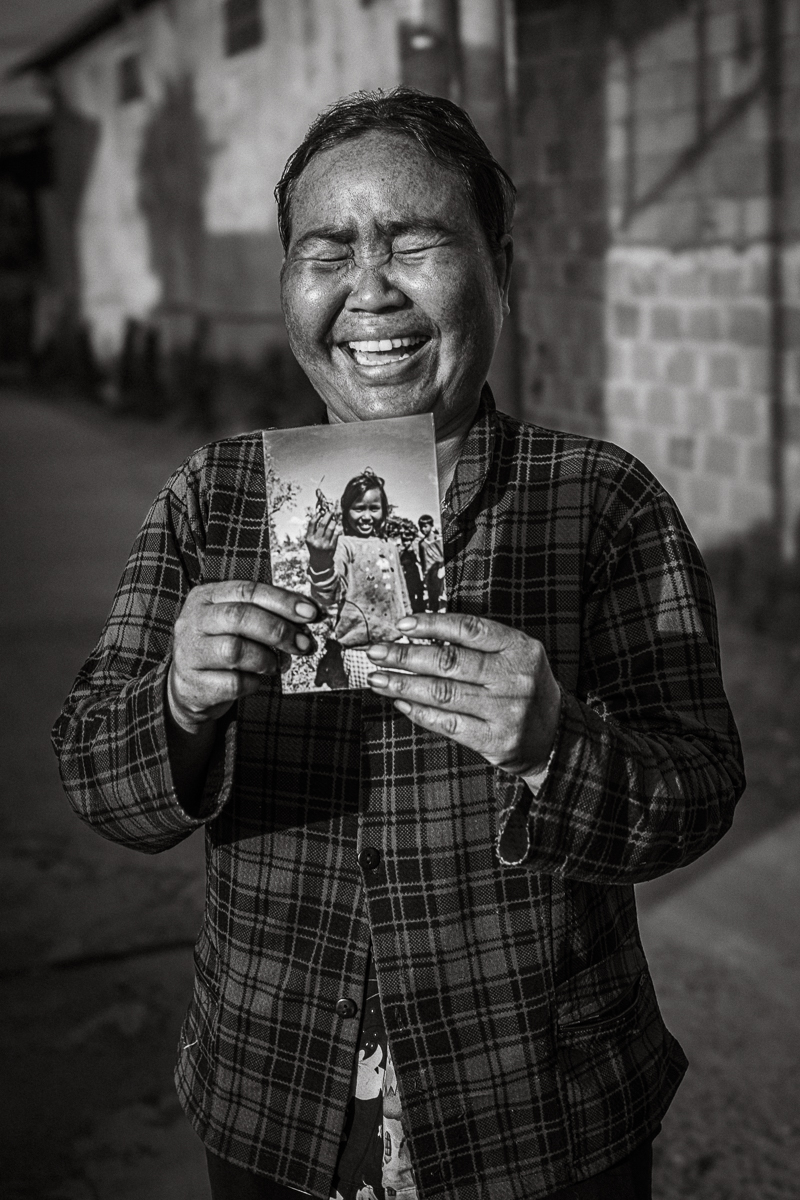
On my first visit to Ia Pia, a remote Jerai village in Gia Lai province, in 1992, I was welcomed by the chief, 65-year-old Mr Kpa Ieng. He spoke little Vietnamese and lived in a simple stilt house, its steps carved from a single tree trunk. The floor was spread with handwoven jute mats, and lining one wall were 25 large earthenware jars of ruou can, a year’s supply of the traditional communal rice wine, reserved for special occasions. At one end of the house, tobacco, maize, and beans dried above the smoky fire.
During our conversation, I was shown a crossbow and the imposing skull of a wild forest cow. “You have to know how to shoot the cow, otherwise it goes completely wild,” the chief said with a knowing smile.
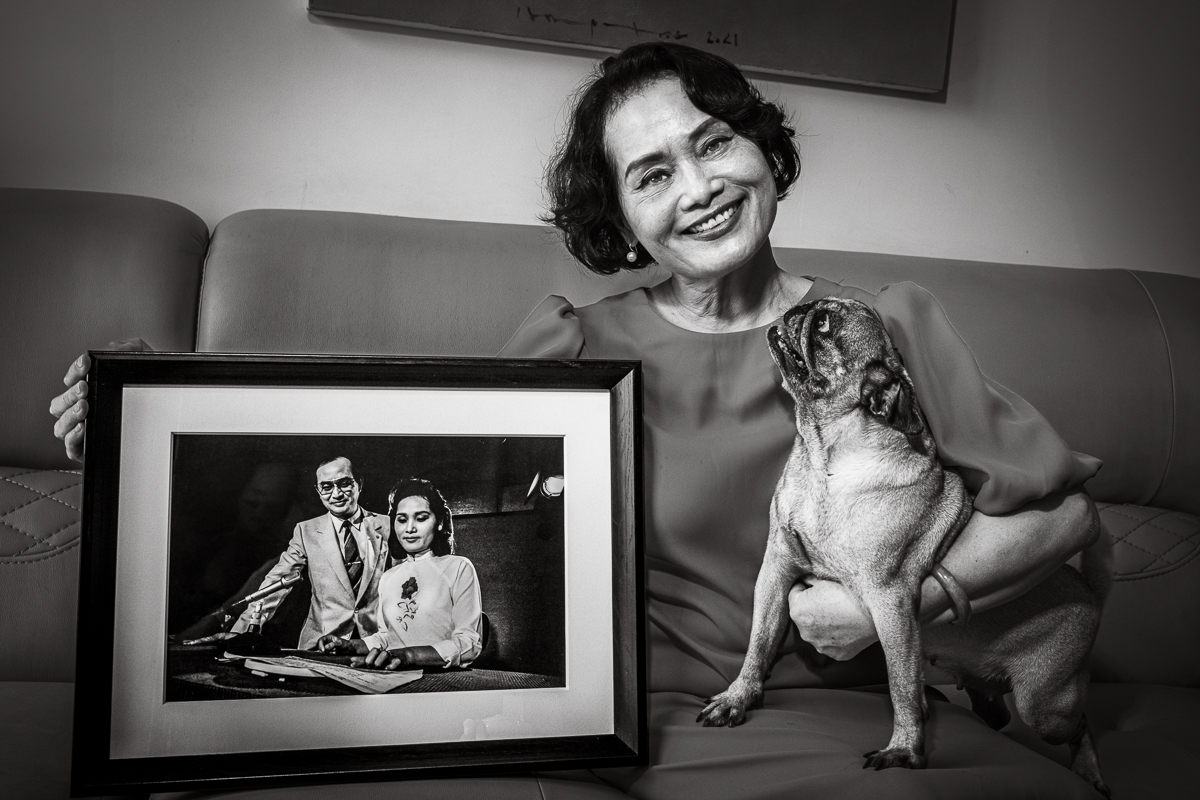
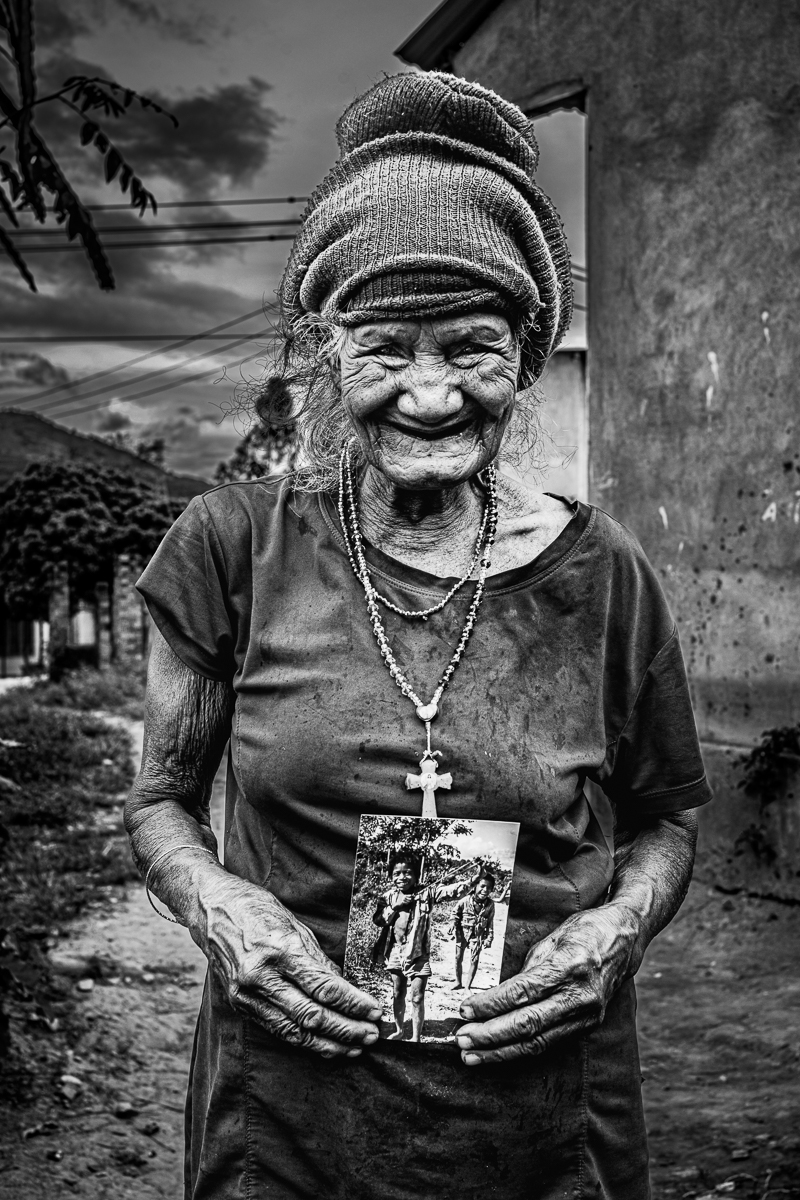
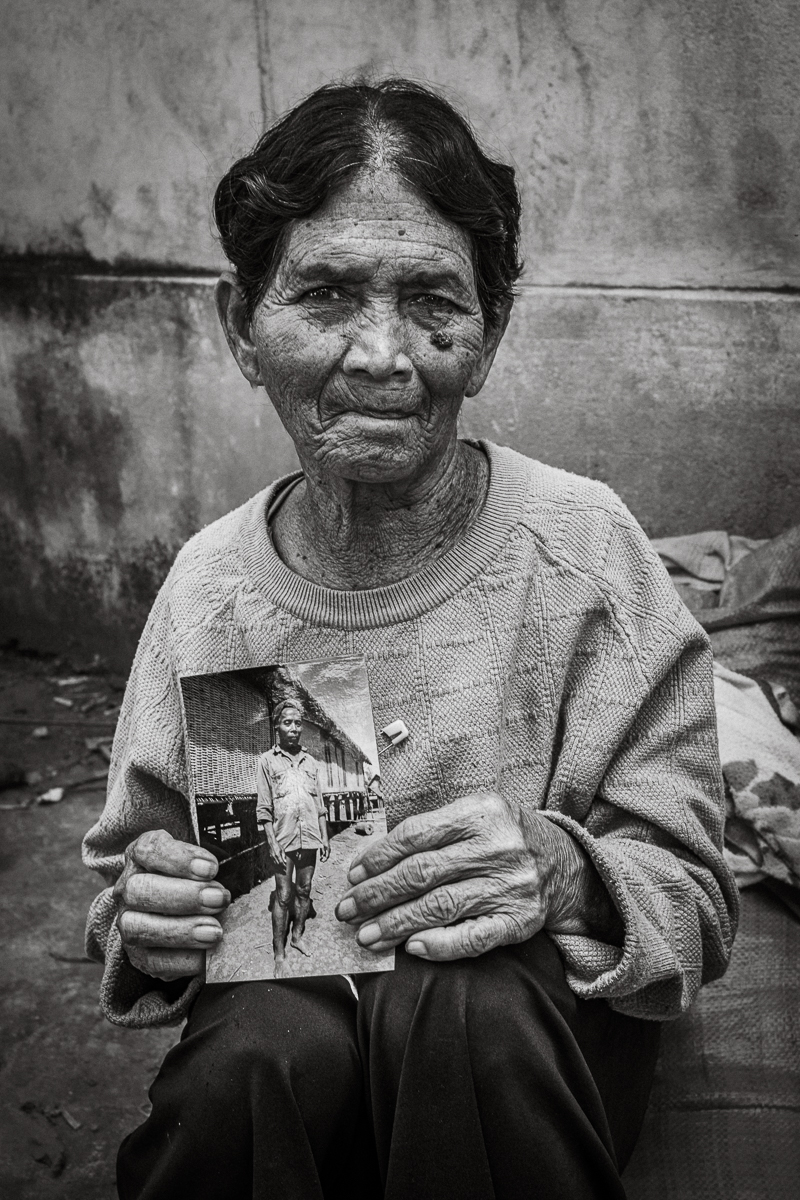
By 2022, Mr Kpa Ieng had passed away, but his widow, the elderly Ro Lan Lat, still lived there. When shown the old photograph, she sat quietly, gazing at her late husband, lost in memory and thought.